
SoftWave vs. Shockwave Therapy: What’s the Difference?
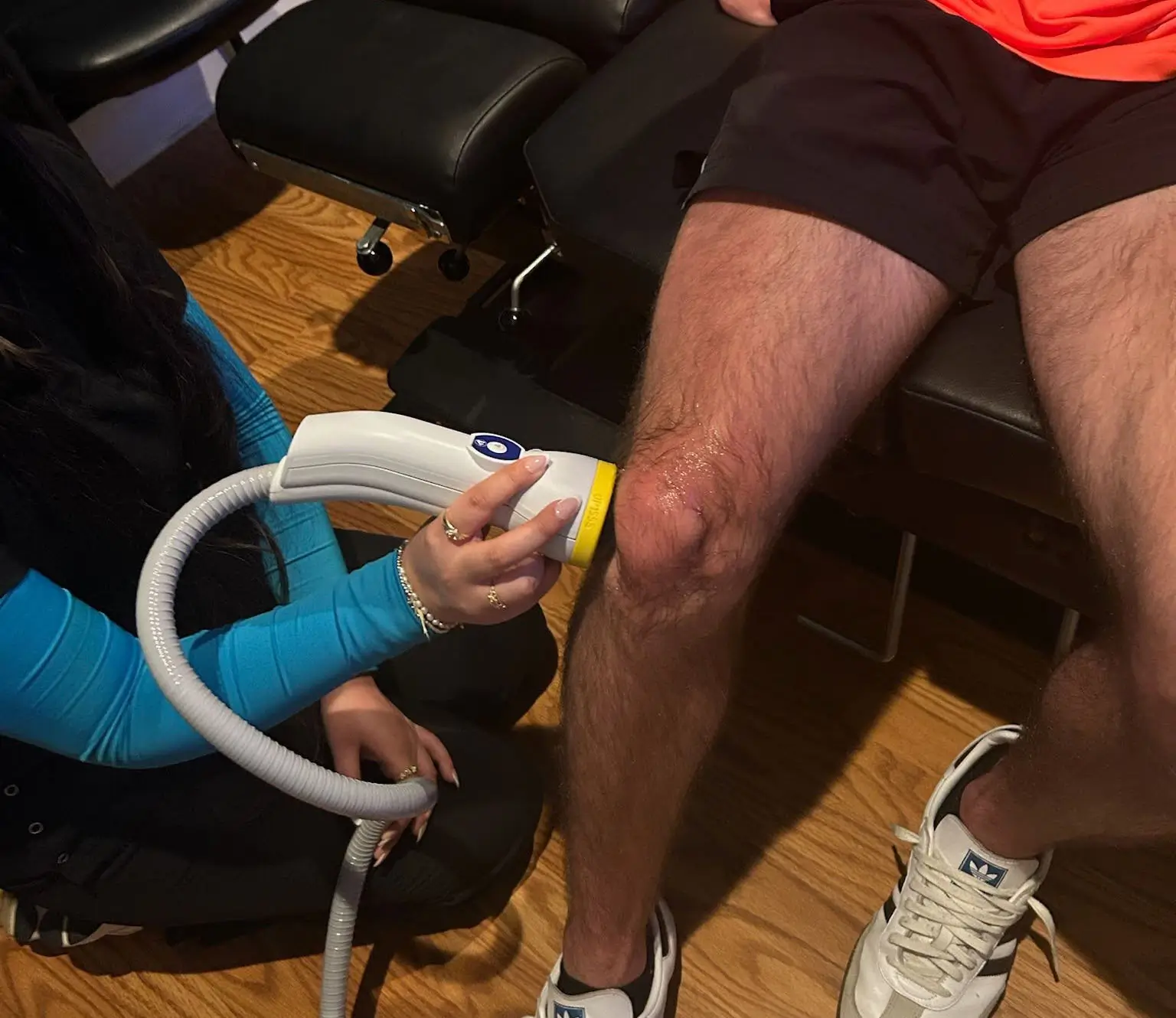
SoftWave Therapy and traditional shockwave therapy are both forms of extracorporeal shockwave therapy, but they deliver acoustic energy differently. SoftWave uses a broad-focus applicator that spreads acoustic wave energy across a wider treatment area, while traditional focused and radial shockwave devices concentrate pressure into a smaller, more targeted zone.
Neither option is automatically the right fit for every person. The better choice depends on the condition being treated, your treatment goals, and a physician-supervised assessment of your specific situation.
SoftWave vs. Shockwave at a Glance
|
Feature |
SoftWave Therapy |
Traditional Shockwave |
|
Technology |
Broad-focus electrohydraulic acoustic wave |
Electromagnetic, piezoelectric, or pneumatic radial |
|
Treatment Area |
Wider treatment field |
Smaller, targeted area |
|
Mechanism |
Broad energy signaling, no induced microtrauma |
Often relies on controlled microtrauma |
|
Sensation |
Mild, repetitive tapping |
Often more intense |
|
Downtime |
None |
Minimal, varies by protocol |
|
Typical Session Length |
30 minutes or less |
Varies by provider |
|
Delivery Setting |
Clinic visit or select in-home |
Clinic-based |
SoftWave Therapy Explained
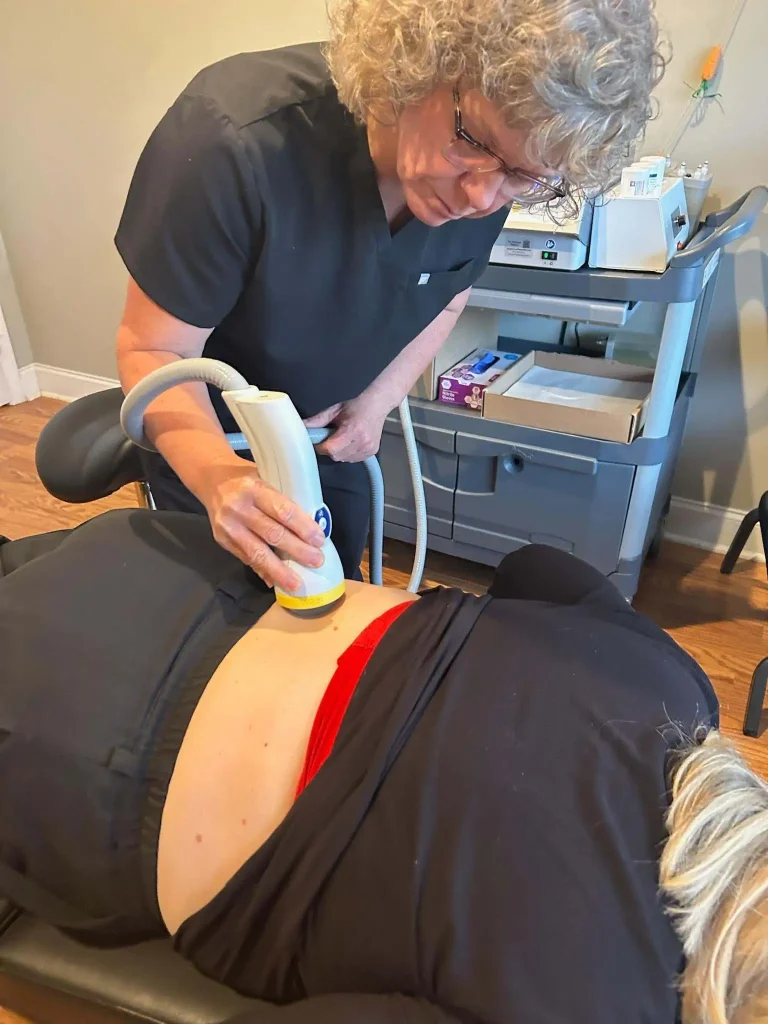
SoftWave Therapy is a non-invasive, drug-free pain treatment that uses broad-focus acoustic wave energy to stimulate the body’s natural healing response in muscles, tendons, and joints. A handheld device delivers that energy across a wider treatment area than older, more concentrated devices, which is why the technology is described as broad-focus.
The wave pattern creates gentle shearing forces at the cellular level. That signal effectively tells the body a new injury has occurred in the area, which prompts it to increase blood flow, release growth factors, and begin its own repair process without the tissue damage a true injury would involve.
SoftWave technology is FDA 510(k) cleared for activation of connective tissue, treatment of chronic diabetic foot ulcers, treatment of acute second-degree burns, temporary increase in blood flow, and temporary relief of minor muscle aches and pains. At Health Plus Mobile, sessions are performed by certified Chiropractic Assistants under the clinical oversight of Dr. Doug Jordan, DC.
Key Differences Between SoftWave and Shockwave Therapy
Technology Used
Traditional shockwave devices generally rely on electromagnetic, piezoelectric, or pneumatic radial systems. SoftWave uses electrohydraulic technology, which produces a broad-focus wave pattern.
Energy Delivery Pattern
A focused shockwave device concentrates energy into a small, precise area, which can be useful for targeting one specific point of injury. SoftWave’s broad-focus pattern spreads energy across a wider zone, covering more of the surrounding tissue in a single pass.
Sensation and Comfort
Sensation varies by device and by person. Traditional focused shockwave intentionally creates controlled microtrauma to kickstart repair, which is part of why it’s often described as more intense, with some soreness during or after treatment. SoftWave’s broad, lower-intensity pattern is designed to trigger the same repair signaling without that microtrauma, which is why it’s generally described as a mild, repetitive tapping sensation that most clients tolerate comfortably.
Treatment Time and Sessions
Session length and the number of visits needed depend on the condition being treated and how an individual responds. Health Plus Mobile SoftWave Therapy sessions typically run 30 minutes or less, and a full course of care is generally structured over multiple visits.
What to Avoid After Treatment
Because a session works by prompting a short-term inflammatory response, most protocols recommend skipping ice and anti-inflammatory medication for the first day or two afterward so the body’s natural signaling isn’t interrupted. Your care team will walk you through any specific aftercare guidance for your treatment area.
Conditions These Therapies May Help
Acoustic wave therapies, including SoftWave Therapy, are commonly used to support recovery from soft tissue and joint conditions. People often ask about knee pain and stiffness, shoulder discomfort with reaching or lifting, and lower back tightness. Hip pain with walking or climbing stairs, plantar fasciitis, tendonitis (including tennis elbow and Achilles tendinitis), and arthritis-related joint discomfort come up just as often.
Whether acoustic wave therapy is appropriate for you depends on an individual assessment, not a self-diagnosis based on a symptom list.
Comparing Effectiveness: SoftWave vs. Shockwave
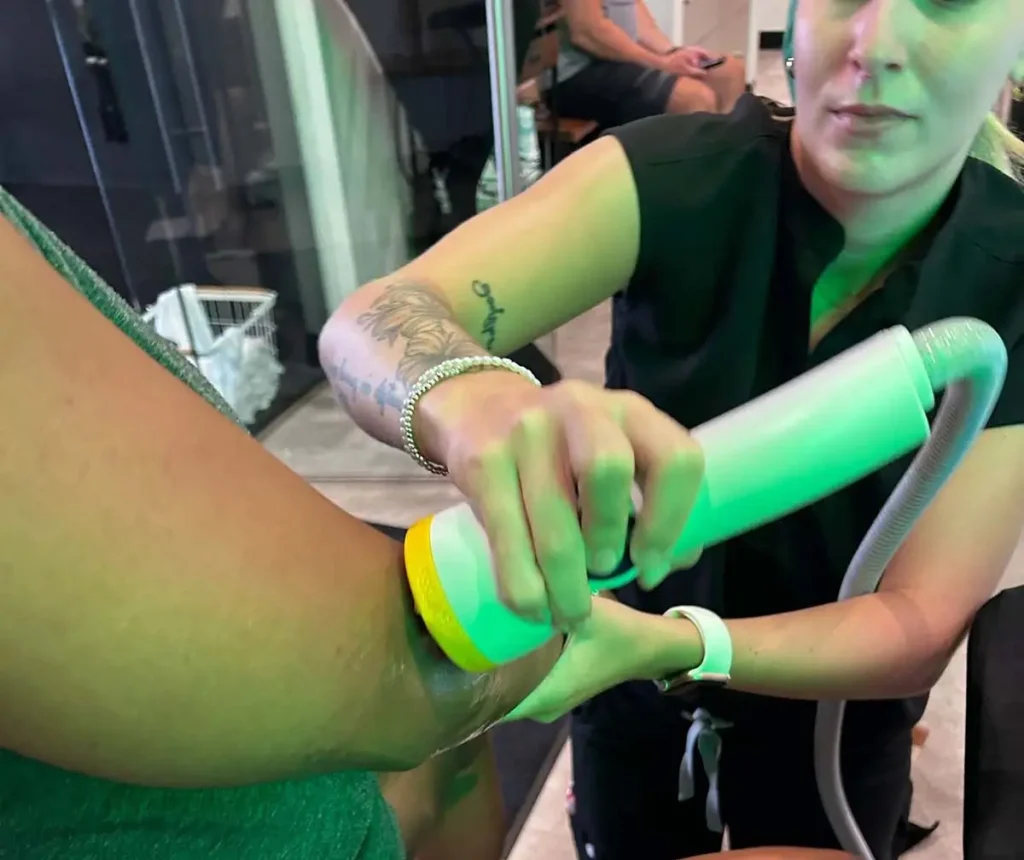
Neither technology is universally better than the other. Effectiveness depends on the diagnosis being treated and your treatment goals, and just as much on the provider’s training and experience as on the specific device or technology involved.
Your individual health history plays a role too, since a treatment that works well for one person’s shoulder pain may not be the right fit for someone managing a blood-clotting condition or a different injury pattern.
The right choice is the one recommended after a physician-supervised assessment of your specific condition, not a generic comparison between two categories of devices.
What Research Shows About These Therapies
SoftWave technology is FDA 510(k) cleared for the applications listed earlier, and a growing body of peer-reviewed research has looked at how extracorporeal shockwave therapy compares to more conventional treatments. Published studies have compared shockwave therapy to corticosteroid injections for conditions like plantar fasciitis and tennis elbow, examined it as an add-on to standard rehabilitation after ACL reconstruction, and reviewed its role in accelerating wound and burn healing.
Taken together, this research points to shockwave therapy, including broad-focus approaches like SoftWave, as a reasonable option to discuss with a physician for certain soft tissue and joint conditions, particularly when more conservative treatment has not resolved the issue. Results vary by individual and by condition, and no specific outcome can be guaranteed. Health Plus Mobile sets realistic expectations at the start of every care plan, under the clinical oversight of Dr. Doug Jordan, DC.
Choosing Between SoftWave and Shockwave Therapy
Choosing between SoftWave and shockwave therapy depends on several factors, including your diagnosis, how long you’ve had the condition, your treatment goals, any previous treatments, and your overall health. The most important step is having a thorough evaluation.
A physician-supervised assessment is the best way to determine which treatment is most appropriate for your condition.
Frequently Asked Questions
Is SoftWave Therapy a Type of Shockwave Therapy?
Yes. SoftWave Therapy is technically a form of extracorporeal shockwave therapy, delivered through a broad-focus applicator rather than the small focal point traditional focused devices use. It’s marketed under its own name because the treatment experience and treatment area are different enough from traditional focused or radial shockwave to matter to patients.
Is SoftWave Therapy Better Than Shockwave Therapy?
Neither is objectively better. Effectiveness depends on the diagnosis, treatment goals, the provider’s training, the specific device used, and the individual’s health history. A physician-supervised assessment is the best way to determine which option fits your situation.
Is StemWave the Same as SoftWave Therapy?
No. StemWave and SoftWave are different manufacturers using different device technology, even though both are categorized as acoustic wave therapies. The provider’s training matters as much as the device brand.
What Is the Difference Between Acoustic Wave Therapy and Shockwave Therapy?
Acoustic wave therapy is a broad category that includes shockwave devices. Not every acoustic wave device produces a true shockwave, so the technology and intensity can vary significantly under the same general label.
Does SoftWave Therapy Really Work?
SoftWave technology is FDA 510(k) cleared for musculoskeletal applications, and peer-reviewed research has compared shockwave therapy to treatments like corticosteroid injections and standard rehabilitation. Results vary by individual and condition, and no specific outcome is guaranteed. A physician-supervised assessment helps set realistic expectations for your situation.
How Many SoftWave Therapy Sessions Are Usually Needed?
The number of sessions varies by individual, the area being treated, and how the body responds. Your treatment plan is established during your assessment with Dr. Doug Jordan, DC.
Is SoftWave Therapy Painful?
Most clients describe SoftWave Therapy as a mild, repetitive tapping sensation. Discomfort is typically minimal, and there is no anesthesia or recovery period required. Some clients notice mild redness or soreness for a day or two afterward, which usually resolves on its own.
Who Should Not Get SoftWave Therapy?
SoftWave Therapy is not recommended for everyone. Situations that typically rule it out include pregnancy where the treatment field includes the fetus, severe blood-clotting disorders or anticoagulant therapy, a pacemaker or defibrillator near the treatment area, an active tumor in the treatment field, and treatment over air-filled tissue such as the lungs or sinuses. A physician-supervised assessment identifies these situations before treatment begins.
Is SoftWave Therapy Covered by Insurance?
SoftWave Therapy is a self-pay service and is not covered by most insurance plans at this time.
Get Started With SoftWave Therapy at Health Plus Mobile
Health Plus Mobile offers physician-supervised SoftWave Therapy in our Charlotte and Lake Norman clinics, with select in-home visits available for qualifying clients.
Book Your Assessment or call us at (704) 885-0383.
Health Plus Mobile | 12335 N Community House Rd #22, Charlotte, NC 28277 |
16623 Birkdale Commons Pkwy Ste 2, Huntersville, NC 28078 | (704) 885-0383